Low Resolutions

 Bikes, Swine  Comments Off on Low Resolutions
Jan 242012
 

My New Year’s resolution was to have a better fucking attitude about shit. I’ve found it takes a lot of coffee. And practice. I’m getting better at it, though. Case in point: I’m going to bring you good news today.

Samuel B. Gause Retrieves Stolen Bike

Who’s Samuel B. Gause? He’s a Chemistry student at the University of Florida who’s once again the proud owner of an IRO Angus. Gause’s bike was stolen this past Sunday, but he found it for sale on Craig’s List and got his sting operation on, setting up a meeting to check out the bike and calling the Gainesville police, who ended up arresting one Collin D. Smith, a 5’6″ tall, 140-pound man who’d apparently been charged with battery and burglary the previous year. Gause, who appears to be nearly tall enough to race cyclocross for Kona Bicycles, sounds like a nice guy who was clearly nervous as hell setting up his first foray into crime fighting, and I’m happy he got his bike back. According to The Alligator, Smith, who was arrested and charged with grand theft and dealing in stolen property by use of the Internet didn’t return a phone call requesting comment, presumably because he was in jail. I suspect The Alligator also has incredibly poor luck receiving comments from deceased individuals and victims of kidnappings. Based on what we know, however, we can assume that Smith’s comment would have been something like, “You tall people with your fucking giant-ass bikes! I will find you all, and I will tilt your saddles into extremely uncomfortable angles! No jail will hold me, and I will find you! Gloating, towering, bicycle-riding, lanky bitches! You think you’re so great! I will find you all! I will make you so uncomfortable!”

Smith is currently being held pending extradition to Portland.

Something Completely Different

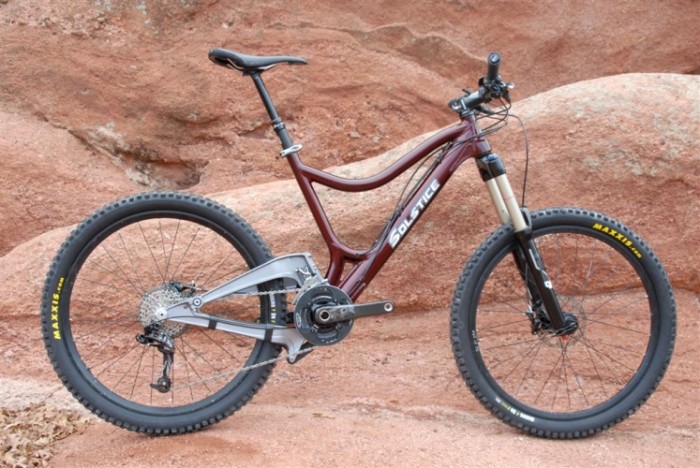
I know I’ve also been bitching a lot about the lack of innovative products out there lately, but I’m happy to report some people are still pushing the envelope. My friend Josh just let me know about a little company called Solstice.

Solstice Suspension Design

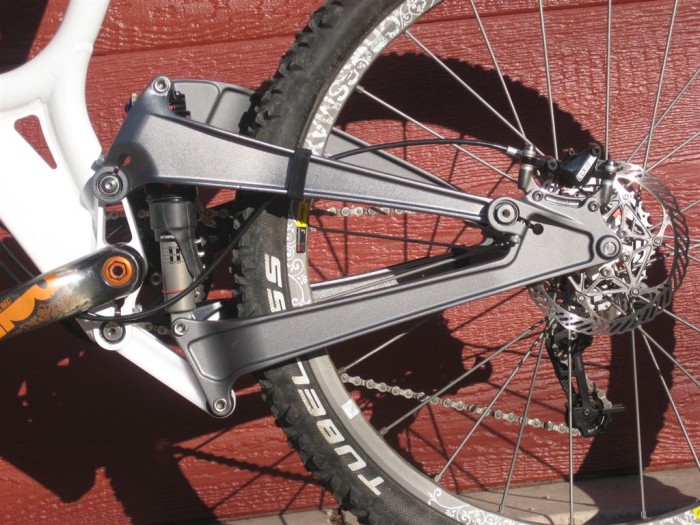
Solstice owner and designer, Chuck Dunlap, is focused on making one frame. One pretty wild, innovative, patented suspension frame. The Solstice is built around something Dunlap calls an “inverted 4-bar,” and that really does make sense once you look at it.

Solstice Suspension Frame Detail

I’ve noticed the fashionable thing to say about a totally unique suspension design you’ve only seen in photos is: “Looks like it has a vertical axle path.” Word is this does, however, have a pretty vertical axle path, something I was after with my design, too.

It doesn’t look particularly stiff, but there’s an article about the design in the Mountain Flyer, and it claims the rear end on this bike tracks great, and that it pedals well and absolutely stomps nasty terrain. Very interesting stuff.

The swingarm parts are cold forged, which is pretty cool and makes me wonder how a tiny bike company producing only a handful of frames can manage to create such a clean and professional looking machine. There’s a kind of beautiful simplicity to the design, despite the complexity of the suspension.

The Solstice features a fully “floating” rear shock, which is another way of saying it has a shock that doesn’t anchor to the main frame anywhere; instead, it “floats” or bolts to moving parts of the suspension system on each of its ends. Sandwiching a shock between two moving suspension members is scary stuff, as the shock rates can get really difficult to manage, but Dunlap’s design looks very well thought out.

The bike is getting 160mm of travel and no, there is no 29er version out there, as far as I know. At over seven pounds, it ain’t light, but there seems to be no reason this design needs to weigh much more than similar frames, so I think the heft represents a bit of caution on the part of Solstice. Better to have the occasional complaint about the weight, than to run into problems.

Most importantly, seeing this really cheered me up. Just the idea that here’s a guy hell-bent on making innovative new products–products that literally turn conventional wisdom upside down.

This is nice, this being positive bullshit. I think I can tolerate it in small doses.

I need a fourth cup of coffee.

Singing Toothbrushes and Simple E-commerce

 Bikes, E-commerce  Comments Off on Singing Toothbrushes and Simple E-commerce
Jan 202012
 

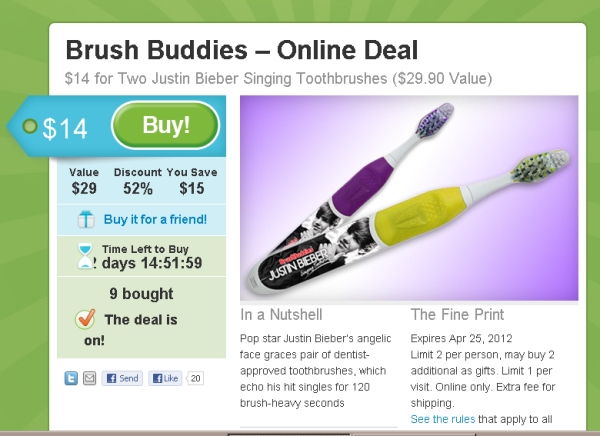
I woke up this morning to the results of last night’s snowstorm and a Groupon ad on my phone for singing Justin Bieber toothbrushes.

Imagine for a second brushing your teeth while Justin Bieber sings in your mouth. I’m no stock broker, but you have to wonder about the Groupon’s valuation sometimes.

On my agenda this morning, besides remembering to hate neo-retro mop tops and considerable snow removal, I’m dedicating five solid minutes to lamenting the demise of Maverick. I hate to see any frame manufacturer close, let alone one that was at least trying something different, but, as a guy who spent actual money on a Maverick fork, I can’t be all that broken up about it.

Lately, I’ve been incredibly busy doing many things that generate absolutely no meaningful income for me. So many things, in fact, that it can be difficult to remember them all, let alone get to them. I’m writing some articles, and–with the obvious exception of this blog–I tend to put a lot of thought into things I write, so those have pulled me away from studying Node and some other nerd stuff. For the two readers or so out there interested in the latest update on the suspension system, there have been some positive things happening behind the curtain, but don’t expect a prototype any time soon. Somebody smarter than me’s involved now, though, and that’s kickstarted my desire to keep putting in those hours. I still believe in the design–probably now more than ever, because now, whenever I start to doubt myself, I remember that Newt Gingrich thinks he’s a tremendous asset to all Americans. Anything’s possible if you’re willing to be completely delusional.

For the probably one person out there trying to ride the rapids of my E-commerce Small Business Empowerment rants, which might sound like John Kerry trying to explain how a toaster works to anyone who doesn’t give a rat’s ass about selling things on the Internet, I just mentioned some solid, simple and free photo editing methods available for doing basic touchup. I wanted to also mention that WordPress itself has enough features to let you do just about anything without even bothering to look around. In fact, having worked with a bunch of image upload and manipulation programs, and even made some (will write code for food), the bundle of stuff you can do in WordPress is pretty impressive.

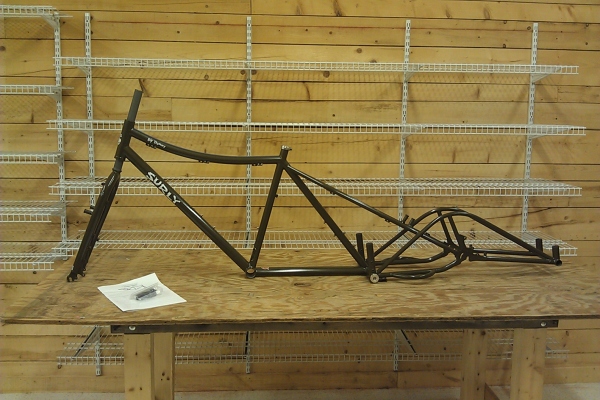
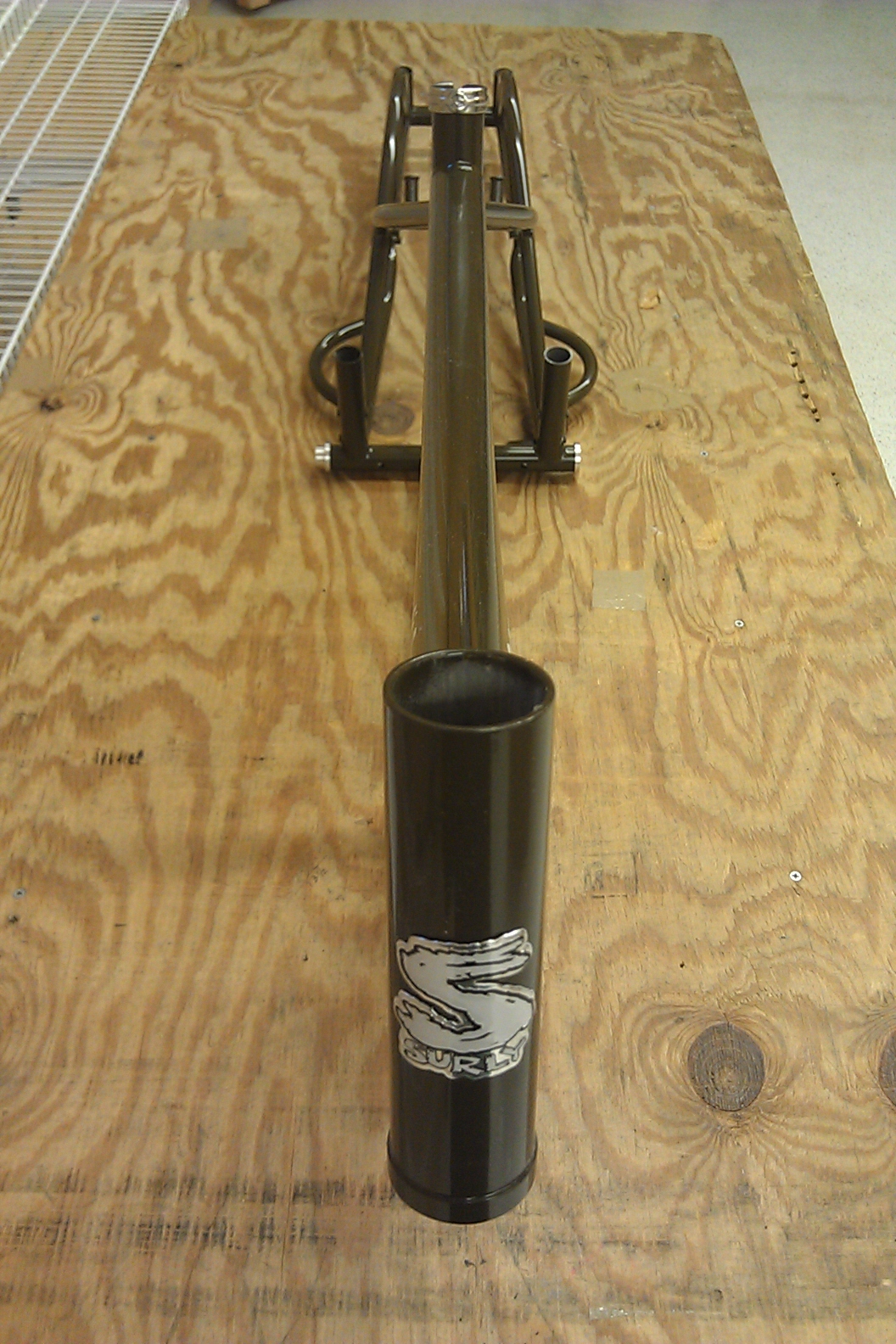
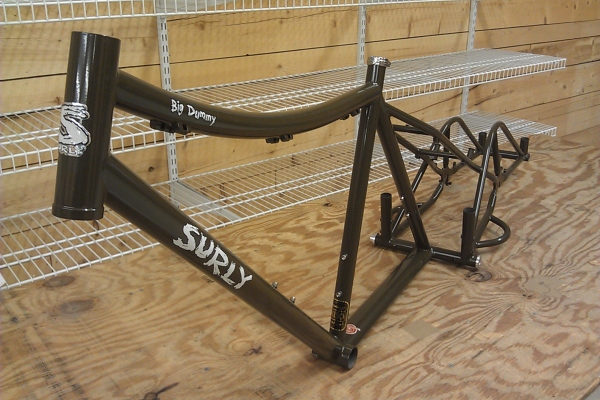
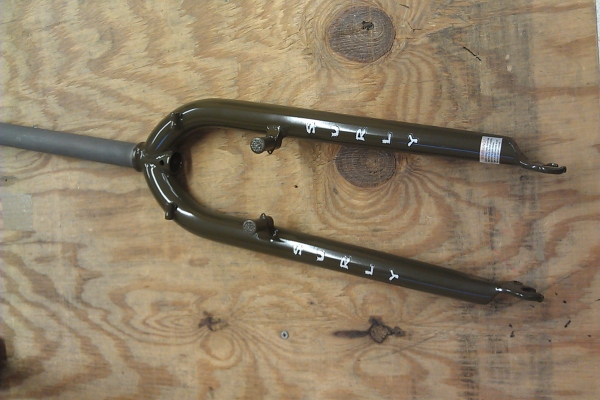
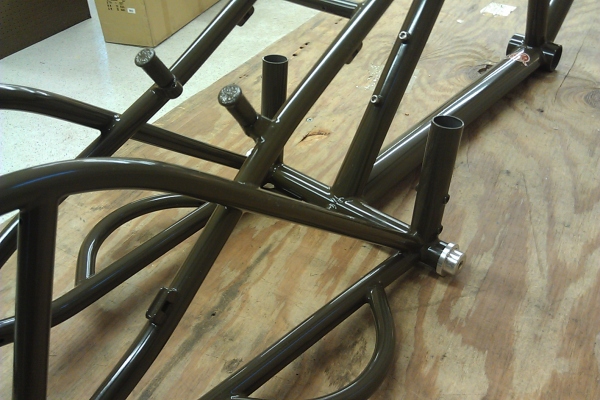
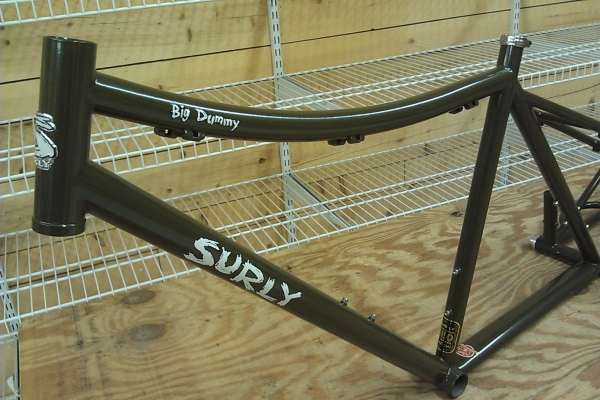
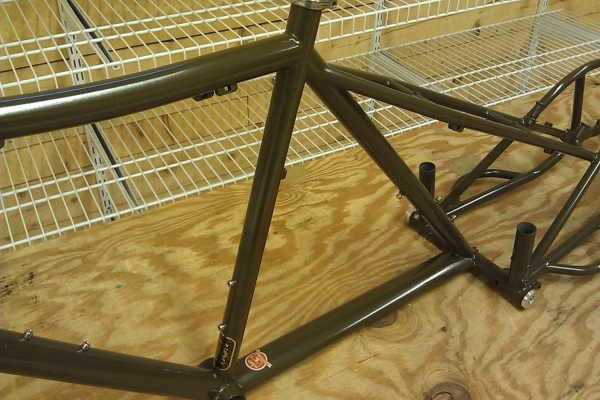
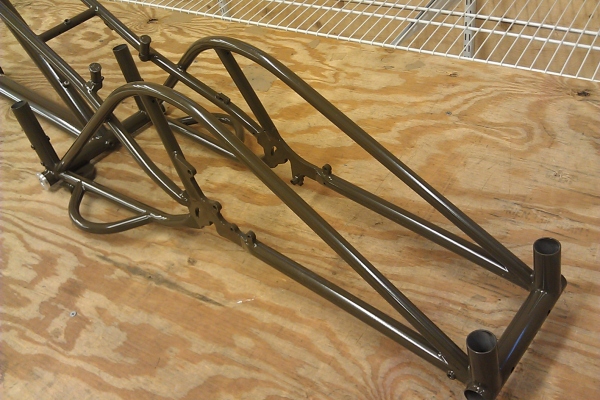
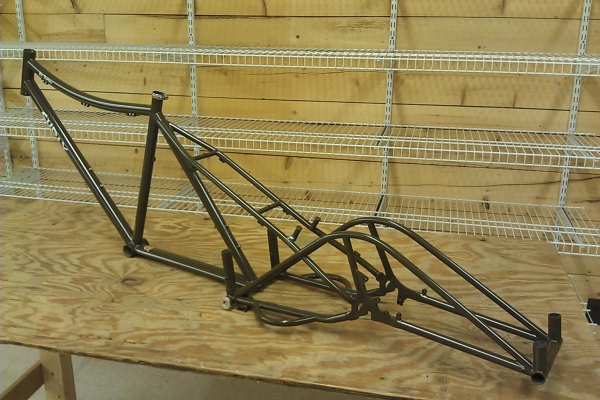
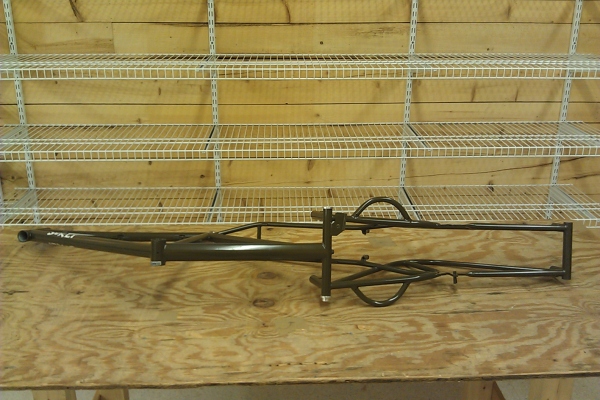
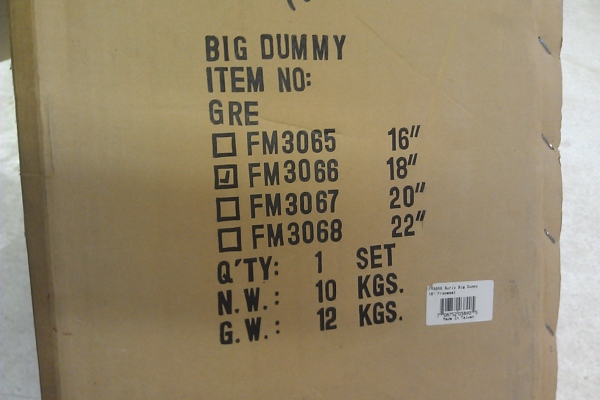
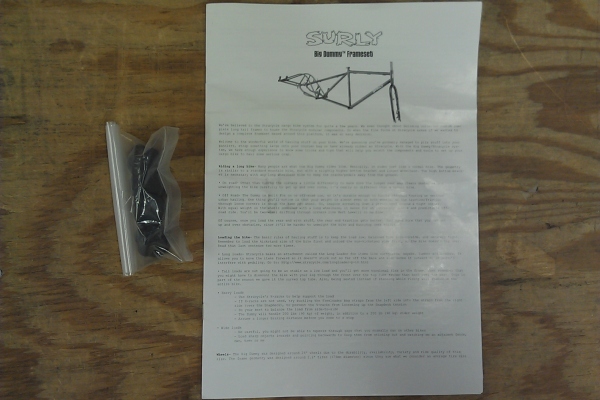
For instance, there’s this Surly Big Dummy frameset I’ve decided to sell. I’ve taken a bunch of photos of it, and WordPress lets me upload those images in bulk, and automatically groups them in a gallery for me. It’s pretty slick.

The only pain in the ass part is accidentally getting other images grouped in with that gallery–either by selecting them accidentally or by trying to add a fresh image to your post after having dropped your gallery in. Seems WP gets confused and keeps adding new images to the old gallery, which is a bit of a drag. If you write your post and then put your gallery in last, though, all should be well.

Here’s the WordPress inserted gallery of shots of the Big Dummy I’m selling.

Not fine art, but they’re clear and should answer just about any questions about the frameset.

For the next step, I’ve set up a PayPal test account, which isn’t particularly difficult, and basically gives you a fake credit card to use for development purposes.

Then I checked out WordPress shopping cart extensions–of which there are many–and picked up a free one called “WP Ultra Simple PayPal Shopping Cart.” There are lots, but this one had good documentation and, once you have the PayPal “Sandbox” (development area to test your fake credit card) set up, adding an “Add to Cart” button to your blog is as simple as pasting in some text. Another nice thing about WordPress, if you don’t write code at all, is that you can install plug-in extensions like Ultra Simple Cart just by browsing through the available extensions, selecting one, and clicking “Activate.” Pretty straightforward stuff.

Now all that’s left is to put all of this together into a blog post that would let somebody buy the Big Dummy, or anything else we’d want to post. I could see this exact method being pretty useful to any local shop interested in:

  1. Reaching customers by writing about what they know.
  2. Potentially selling off some closeout items to test out this e-commerce thing.

Again, if you’re a business, you’d want to check with your vendors before just posting anything, as there are some restrictions, but for selling off demo bikes and outdated merchandise, I really want small retailers to know there’s an option outside of eBay or Craig’s list, and it’s one that actually helps build your own brand, instead of driving people away from your shop.

8-tracks vs.Jetpacks

 Bikes  Comments Off on 8-tracks vs.Jetpacks
Jan 192012
 

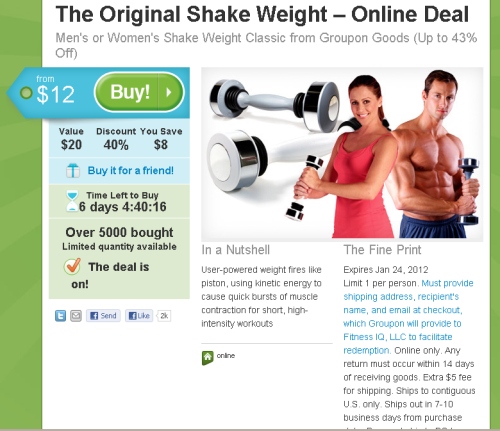
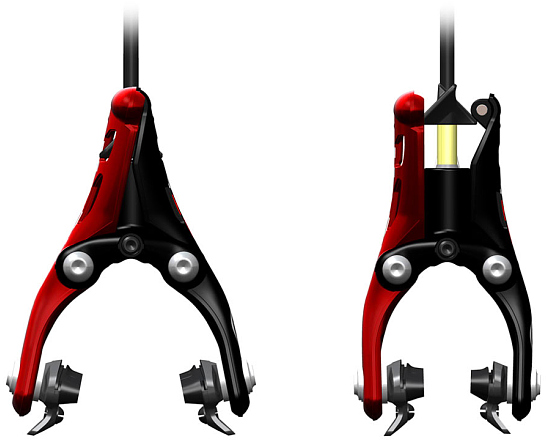
Under the cover of high-profile SOPA protest blackouts, two ground-breaking innovations occurred yesterday. We finally saw detailed photos of Magura’s RT8TT hydraulic rim brakes, and Groupon finally had an offer on ShakeWeights (only $12!).

For only $12 for the women's, I'm getting two to jog with!

Plenty of people are happy to pounce on the perceived ridiculousness of a hydraulic braking system for road bike that doesn’t involve a shiny disc at the center of the wheel, and by all accounts, the momentum is solidly behind disc brakes for road bikes right now, boosted, no doubt, by disc brake advocates and current Goliath-slaying Bike of the People, Volagi. Why the hell would we want the pain-in-the-ass of a hydraulic system mated to all the old problems of rubber pads clamping a rim?

I have to admit, the notion sounds a bit silly–like adding a smartphone touchscreen to an 8-track player (or an 8-track repair company’s Facebook page). In fact, had I never ridden the original Magura HS-33 hydraulic rim brakes, I’d be unable to stop laughing at the whole idea of a hydraulic rim brake for road bikes. But as somebody with considerable time using those old Tomac stoppers, I have to imagine they’d be light years better than conventional TT brakes, and someday, may one day even contribute to a 0.4% drop in the cycling technology-related death rate of triathletes.

For all their faults–like the commitment required to properly align them or the way their horrible stock steel “boosters” made “aluminum” seem exotic as a material–the HS-33s had a range of stopping power that was like watching a color TV compared to the black and white of V-brakes (or the fuzzy white screen of most cantilevers). If there is such a thing as “mid-range” the hydraulic rim brakes had it to spare, and when it comes to controlling a tottering speed-centric death missle of a TT bike, I get their appeal.

But still, come on.

Hydraulic rim brakes?

Apparently, so, according to this Shimano patent filing from 2009.

Sure, the cost of a few patent applications is nothing to Shimano, but we seem to have an awful lot of thought going into a technology that will likely make an appearance, crack the fuck out of a few dozen carbon clincher rims, and then show up on eBay next to Airlines shifters.

This doesn’t feel like innovation to me. I mean, we were promised jetpacks, right? Where are our jetpacks?

Disc brakes have finally become a default in the world of mountain bikes because the perceived advantages now outweigh the disadvantages. Pioneering hydraulic rim brakes on a road bike feels inherently wrong.

Now magnets, those are the future.

A Thousand Words for Zero Dollars

 Bikes, E-commerce  Comments Off on A Thousand Words for Zero Dollars
Jan 182012
 

Google's censored doodle for January 18th, protesting SOPA.

I just finished sending e-mails to my various representatives, expressing opposition to SOPA, so it seems like a particularly good day to be talking about what the Internet can do for you. On a day like today, it’s nearly possible to imagine a level playing field, where communication and information between individuals isn’t owned or controlled by anyone.

So it’s a good day to look at some free resources that are out there to help small businesses ease into the wild and wacky world of e-commerce.

I’ve been stressing all along the value of creating good content. Lest you think it’s just me, consider this short article from FastCompany.com, bemoaning the absolute lack of quality content out there. If the big companies–in every industry–were getting content right, some of what’s described in that article wouldn’t be possible; there’d be no opportunity to distinguish yourself among a bunch of white noise, because all the big companies would have already nailed content. But they haven’t, so there is. And that’s where your authenticity and knowledge as a small retailer comes in handy.

So to communicate that, you want to polish up your content, and it’s never been easier. Let’s look at images.

The old adage “An Image Says a Thousand Words” applies more than ever when it comes to digital merchandising. Maybe video will overtake images at some point as the most valuable media asset for a web retailer to generate sales, but it hasn’t happened yet. There are so many methods for searching out quality photos on the web or taking and filing away photos these days, that I don’t think it beneficial to waste time here on the obvious steps like “buy a camera” and “upload” your photos.” Suffice to say, cameras capable of high-quality photos are available for next to nothing, and most phones today take half decent photos, if not the quality of a dedicated camera. Keep in mind, we’re looking for web quality here, which isn’t as demanding as print quality, so you don’t need to hook yourself up with a $6,000 camera in order to sell things on the Internet. Another non-factor is uploading and storage. There was a time when just getting photos up to a site required a file transfer program or some ingenuity, but everything from Flickr to Google+ will let you upload and organize images pretty easily, and storage size is a non-issue. Better still, the recent versions of WordPress I’ve been discussing as the foundation of our first e-commerce configuration make uploading images, or linking directly to them from a storage area by inputting the image’s URL (the thing that’s in your browser’s address bar when you’re viewing a single image) extremely easy. Bottom-line: taking and storing images is a non-issue.

Other details are more important, though. Here are some things to consider when getting ready to “merchandise” or put a product up for sale on-line.

  1. Find Photos from the Manufacturer or Take Your Own?
    It’s almost always better to own your assets–in other words, take your own photos. This is true for a bunch of reasons, including that authenticity you hear me blathering on about so much. People want to see what you have, not the generic image. Potential buyers don’t like seeing the same factory photo everywhere they go, and they’ll often find unique photos more compelling, provided the quality isn’t poor. If you’re only listing a few products to test the e-commerce waters, you can usually shoot a bunch of photos of your product yourself, another advantage to being a little guy. If you absolutely lack a physical space to shoot photos or for some reason can’t unpackage an item for photos, using an image from the company’s site may be your only option. Never take an image from an on-line retailer, and be careful in general, as photos are property. There are cases where even the manufacturer doesn’t want its photos being used by unauthorized people. When in doubt, shoot your own photos.
  2. Shoot a Lot of Photos
    You want to take as many photos as possible, from as many key angles as possible. Have the potential buyer in mind. He or she may want to know even the slightest detail, so, if it’s a bike frame we’re photographing, don’t hesitate to get photos of the underside of the bottom bracket shell. Whenever possible always take a photo of what’s included in the box, another preemptive way to answer a lot of questions for consumers, and even how the item will be packaged when it arrives. Your goal is to put the potential buyer at lease with the decision to buy, and that means making him or her as familiar with the items as he’d be if seeing it in your store.
  3. Don’t Over-Edit
    Sometimes you need to crop a photo or resize it in order to make it look its best, but avoid fancy stuff like trying to cut a bike frame out of a busy background. These things often end up looking worse than if you’d just snapped the photo and posted it. Don’t go crazy trying to make it perfect, or it’ll look worse than a basic photo.
  4. Pay Attention to Your Background
    The setup for the image, and understanding what it says about your product and about you, is very important. There’s no point in offering up terrifying examples of bad images from Craig’s list, because BikeSnobNYC has made an absolute art form of it. Suffice to say, pay attention to what you have in the background, and what it says about you (I once had someone send me a photo of his personal commuting bike to help him determine proper handlebar position, and the image included a woman holding her head in her hands in the background). You shouldn’t be expected to spend three hours on each photo, cutting out the image and setting it against a new white background, but you should be able to touch it up as necessary to make sure it helps potential customers feel comfortable purchasing from you.

  5. Understand Consistency
    You might not have that much room for your photos, and it’s OK for viewers to see some extra stuff in the background of your image, but you need to keep some aspect of the photos consistent from one photo to another. If you’re taking pictures of whole bicycle, you may want to vary the location of their photos, but try to maintain some cohesion from one round of product photos to the next. If a close up of the drive side crankset was taken for one bike, it should be taken for others. Why? Because some aspects of repetition build comfort for your consumers. In the earliest days of my original e-commerce store, I had no room anywhere for photos on rainy days, so I took every gallery photo of a customer’s bike on the shop couch. It became a rite of passage to see a great, custom-built bike up on the same couch–so much so that customers who’d built their bikes up at home often sent in photos of their own bike on their couches (I can only imagine what their significant others thought about those photo shoots).

Regardless of how “DIY” and simple your site and your approach to merchandising some products, it’s just a fact that graphic design will come into play, and that’s where today’s free resources come in handy. For most people photo editing means Adobe’s Photoshop, but for the work most of us will need to do, Photoshop is overkill. Here are some free alternatives that will do the basics (crop, resize, sharpen), along with my personal choice.

First, consider the web-based photo editing services out there. They’re everywhere now, and probably it’s only a matter of time until WordPress bundles drastically better photo editing capability right into their already good image upload and file management system.

Picnik handles most of what you could need without any fees or hassles, and it’s particularly good at adjusting exposure to and shadows to help smooth out otherwise inconsistent images.

Picasa is a Google product that can be bundled with Google+–Google’s social networking platform, which I’m found to be a much better place for storing and managing information than interacting ala Facebook. If you like to tinker, you can configure a decent little image assembly line out of these Google products, and Picasa itself offers decent features like side-by-side image editing and borders.

FotoFlexer bills itself as “the world’s most advanced online photo editor,” and they might be right. You can smooth and fade in FotoFlexer, and it works well, which is pretty rare for online image editors, and the layout and overall functionality scored high with me. Of on-line resources, I’d spend some time with this one, though the downside is that they make you watch ads.

Gimp. That’s right, “Gimp.” Unlike on-line editors–which all seem pretty obsessed with letting you create stupid neon effects and stuff, the Gimp is a free, open source Photoshop replacement. Is it as good as Photoshop? Oh hell no (though die-hard Gimp fans would argue this). Is it really freaking amazing for a free program? You bet. For years, I handled all graphic design work for a three-million dollar e-commerce store using only the Grimp. I even used it to queue up print ads, which I then imported into another free vector-based editor to get ready for magazine publication. You can trace and cut out image content in the Gimp, do extensive effects work like dropping shadows, and generally do everything you can do in Photoshop, and there’s an extensive library of free resource material out there, as well as dedicated Gimp how-to books. It’s not as polished as Photoshop, and it’s not perfect, but you can run a decent sized company without investing anything in graphic design with this program.

Displaying quality images of your products doesn’t just increase the odds that they’ll sell; it also helps market your store as a brand. It goes to your reputation. Perceived reputation of an on-line store is one of the top considerations of shoppers, and they associate thing like organization and image quality with a well run operation. Even if you’re a very small business–hell, even if you’re just one person selling something–there is a tremendous advantage to professional-looking content, including cleaned up images, and it’s surprisingly easy now for anyone to display unique, high-quality images.

Occupy the Internet, Small Business Style

 Bikes, E-commerce  Comments Off on Occupy the Internet, Small Business Style
Jan 172012
 

Ah, the Internet, that terrifying behemoth hell-bent on destroying small business in America. Or not. You know how politicians start to talk about the evils of class warfare only after a large enough percentage of Americans are poor enough to face a little pepper spray? How class warfare isn’t ever brought up in relation to, say, an orchestrated effort to carpet bomb the middle class? Well, there’s a similar bit of tomfoolery afoot when it comes to the Internet. Only when the Best Buys and Targets of the world start to get hurt by the likes of Amazon do The Powers That Be start to swivel their fat, old white heads in that general direction to figure out which party has the most money and can be declared a winner. But what about the mom and pop stores? As I pointed out in the past, Amazon has been strangling small retailers out of existence for some time now–or that’s not entirely accurate: they’ve been leading them to their candy cottage in the woods with a trail of gumdrops, boiling them down to bones and sucking out the marrow.

But that doesn’t have to happen to all small retailers.

As I’ve argued, the absolute worst mistake a small business can make is to believe “Amazon” and “the Internet” the same thing. The Internet and its possibilities far exceed Amazon. It belongs to all small businesses, and if you’re not using it, you should be.

My friend Kyle posted a link to an interesting article in the New York Times that supports the notion that “little guys” still have a place on the Internet. The gist is that some consumers will pay more to support local stores–regardless of where those “local” stores are located. In other words, a guy in Kansas might by drumsticks from Drumworld near Pittsburgh, instead of, Musican’s Friend, an enormous web retailer, or Amazon. The article raises some good points, but also fails to flesh out the actual consumer making these decisions as anything much more than altruistic. In fact, there are plenty of self-serving reasons why consumers choose to shop with smaller e-commerce companies, and chief among them is product knowledge and attention to detail. Amazon can process millions of orders a day and offer low prices, but are they truly a resource for a lot of what they sell? Can you call someone at Amazon and talk drum sticks, or espresso makers? What about rear mountain bike tires, saddles?

Sure you can have reviews on mega-sites, but there’s a place on the Internet for qualified opinions, and actual quality product information, too. That place is the small retailer’s site.

Before the whole Specialized vs. Volagi madness took center stage, I was looking at some practical and specific ways for any small business to easily test the e-commerce waters. We looked at the importance of becoming a knowledge base for people, an authentic and trusted source of quality information, and from there we moved into getting specific and setting up a basic WordPress site. Today I’m offering some organizational tips and organizational resources to help you get ready to merchandise your product on-line.

Know Your Product Categories and Attributes

Even if you’ll only be posting one item at a time, trust me, you need to know that product’s category and its attributes. Category is a relatively simple term, but give it sufficient thought. You might not have a fancy database to work with right now, but, trust me, life will be much easier for you later on if you start thinking in these terms now. So I have this Surly Big Dummy frame and fork (aka “frameset”) I’m thinking of posting up here for sale. How would I categorize it? Start super-broad and then zoom in. Here’s on example.

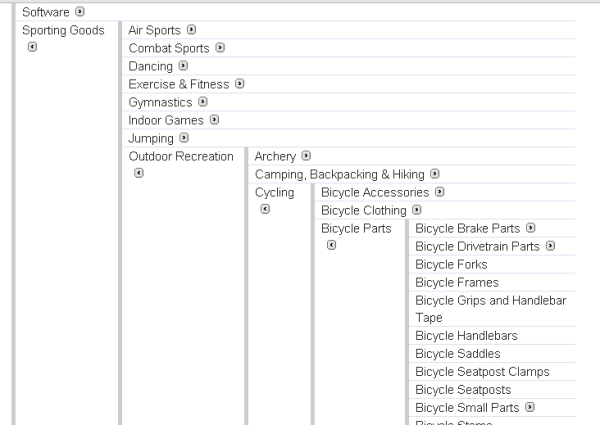
Sports and Outdoors > Cycling > Frames and Framesets > Framesets (include the fork) > Commuting/Cargo

Try to define your category first, then check your work against the overlord of all things taxonomy and classification, Google:

Google Product Taxonomy Example

Now change your category structure to make it like Google. Why am I acting like such a badass when it comes to Amazon, but shrinking from going against the Google grain? Because Google’s in the business of getting your products found by people who need them. Think your product is unique enough that you need your own taxonomy and should ignore Google’s? Make sure you haven’t been drinking, and then model it as closely as possible, because chances are you’re wrong, but always keep in mind that you can be more specific than Google. Once they stop at “bicycle frames,” for instance, I might keep sub-dividing into “frame” and “frame and fork” categories. Whatever you do, never be more vague than they are. Why not just check the Google link I’ve provided first? Because you want to train yourself to think in terms of categories. It’s like crunches for the rippling six pack e-commerce abs you’ll eventually have. One day you might be sitting in a room listening to a pitch from a search engine ranking specialist, and suddenly realize–thanks to your well developed understanding of this stuff-that he’s full of shit. You’d be surprised how big an advantage instinctive organization can be when it comes to getting your information found, and making site visitors happy.

“Attributes” is by now a technical term in the world of content management systems for serious e-commerce companies, but everyone should use them. Simply put, they’re aspects of a product that lets people compare it to other similar products. “Color” and “size” are examples of very common attributes, but when thinking about what you want to sell, you want to be much better organized than just listing these really common attributes (sometimes referred to as “options” because they’re the attributes that most often show up in pull-down menus on product pages). Knowing a fill list of your product’s attributes means answering all questions a consumer might have–consumers tend to like that. For examples of bad or completely missing attributes, try to buy something complicated off Craig’s list. Here’s an example from the Big Dummy frameset I’m going to sell:

  • Frame Material
  • Head Tube Type
  • Fork Steerer Tube Diameter
  • Seatpost Diameter
  • Rear Dropout Spacing
  • Rear Dropout Type
  • Maximum Tire Size
  • Wheel Size
  • Front Dropout Spacing
  • Water Bottle Bosses
  • Color
  • Size

So that’s the list of questions you want to be able to answer for your site visitor. Think of the resulting set of attributes as “tags,” because all attributes are essentially information tags that help people find things. And by all means refer to Amazon and other retailers already selling the item in question, and check out their attributes, too. There’s always a chance they thought of more attributes than you have, and your goal should be to answer all of the customers’ questions as quickly and easily as possible.

From here we want to look at some free and simple resources that are out there to help you merchandise your product. That’s where we’ll be going next.

Jan 162012
 

Let’s talk about really direct marketing. Sure, I’ve been exercising an unhealthy obsession with guerrilla e-commerce lately, working to convince small shop owners to start using the almighty Internet for something more than just a Google map to your location and (God forbid) printable coupons. It’s possible–or rather, let’s go with “super necessary” for small businesses to dip a toe into online sales, but all that will have to wait.

Why? Because the bike industry is witnessing a masterful education in the fine art of public relations self-destruction and brand anti-marketing that we’d be fools to ignore. Over the weekend, Specialized got their ass handed to them by Volagi, and then things got interesting.

Turns out Specialized spent about $1.5-million on their soul-killing, heavy-handed intimidation tactic/wild goosechase–an absolutely disgusting amount of money to piss away under any circumstances, and even more so right now, when John Q. Public is hyper-sensitive to wasteful, inappropriate behavior of the part of big companies. Almost every word that’s been printed regarding this entire sad episode has done damage to Specialized, and the facts haven’t done them any favors, either. The revelation that this much money was wasted in the service of stifling innovation and intimidating competition won’t do much to reverse the public perception of Specialized as a giant, out-of-touch, monopolistic, evil-doing gaggle of douchebags. Not to worry, though, because, once again, somebody let Specialized founder Mike Sinyard communicate with the public.

This lawsuit was a matter of principle and about protecting our culture of trust and innovation. We respect the ruling of the court in our favor. We are very satisfied with the outcome and the damages set at $1.00. We really want to put all our passion and time into growing the sport of cycling.”

Clearly, Sinyard and Rupert Murdoch have the same “magic touch” when it comes to understanding their public.

Read that quote again, if you think you’re up to it. The first sentence sets a good tone, and then, well . . . it makes you wonder if anyone at Specialized realizes the mic is on. Really, guys? You’re really “very satisfied” to’ve spent a million and a half bucks getting a dollar in return? If you’re trying to tell us you’re glad this didn’t have a destructive effect on Volagi, you’re sure not sounding that way, which means you’re–miraculously–sounding both disingenuous and unconcerned that you just wasted so much cash on a half-assed attempt at evil. And, even if that’s the case–even if you are sort of pissed off and dazed still, you realize, right, that you’re not supposed to let everyone know that’s where you are with this? It begs the question, do these guys have a PR department? Apparently, Specialized can spend $1.5-million on trying to stifle competition, but there’s nobody even making $10 an hour to give the main man’s missives a once-over to ensure they’re not repulsively demeaning and logically adrift.

Turns out I have some free time right now, and sounds like The Big S could use some pro bono help, so here’s my free rewrite of how anyone with even a small amount of respect for his customers would have written that letter:

“This lawsuit was a matter of principle and about protecting our culture of trust and innovation. At Specialized, we really do believe in our products more than anything, and that passion sometimes leads us to protect them at all costs. We’re making bikes because we believe in the positive things that a bicycle can do, and that’s a love we share with Volagi and every other brand. While we feel strongly enough about our reputation and our innovative products to take the steps we took in this matter, we sincerely respect and admire the desire Robert and Barley have shown to distinguish their product, and we hope they, and all those with a desire to make cycling better, continue to share our passion for making great bikes.”

Or some such shit. (I’m available for freelance work, by the way, for press releases, writing wedding invitations, really bitchin’ grocery lists, etc..)

There is a way to communicate to the public while still side-stepping legal landmines, but it involves seeming human and actually relating to your customers, instead of poking rifle barrels out of your ivory tower and doubling down on the draconian bullshit.

But, anyway, this is good for us–good for anyone studying how not to communicate with the public. Pop quiz: guess which company, Specialized or Volagi, better understands how to use social media? Here’s a hint: contrast Sinyard’s statement way above, with this tweet from Volagi:

Best dollar we ever spent.”

The thing some companies still don’t seem to get about social media is that they’re participating in it whether they want to be or not. You’re always marketing directly to your consumers. When you’re announcing a hot new product, or when you’re suing somebody. There’s a level of transparency to today’s businesses that some CEOs just don’t seem to understand.

Some, on the other hand, seem to understand it all too well. Maybe Sinyard should take a cue from “International Grand Confrerie Sommelier,” wine consultant to Costco, and maestro of social media, “Krunch,” who prefers to engage his social critics more directly. Disgruntled by a woman’s bad review of his business on Yelp, “Krunch” apparently took it upon himself to create a fake blog in the woman’s name and use it to describe her as a drug addict and prostitute, emailing her a link to the blog and writing, “Now every time a company for a job or someone searches YOU on google they will read my side of the story.”

Well played, sir. You are, indeed, ready to “serve world leaders, heads of state and Fortune 100 members.” Now, to complete their public relations self-destruction masterpiece, all Specialized has to do is personally attack everyone who thought their lawsuit was a horrible idea. Given how they’ve handled things to this point, nothing would surprise me.

It’s not like they’d have to work very hard to intimidate some members of the cycling press, who fall all over themselves to self-redactedit anything meaningful anyway. In the dying embers of this train wreck, we find this article on Velonews, which features a slightly more intriguing editorial preamble than most:

At the author’s request, the editorial notes at the bottom of this story were rewritten. They did not reflect the opinions of VeloNews.com.”

Is it just me, or does the editorial quote above read a hell of a lot like, “After having a gun barrel pressed to his forehead (no easy task to do to a man who’s, like, 8-feet tall), Mr. Zinn would like to reconsider those things he initially said and meant but might’ve seriously pissed off one of the largest advertisers in our industry.” Say, does anyone have a screen grab of how Lennard Zinn’s original article read? I’d really like to see that, Velonews. Anyone?

Jan 132012
 

Today, a special weekend bonus post in honor of facing down the big guys without flinching.

Top 10 New Year’s Resolutions of Specialized Bicycles:

  1. Stop picking public fights with kids much smaller than you.
  2. Once engaged in fight with kid much smaller than you, stop closing eyes and scratching blindly at opponent while screaming hysterically.
  3. Propose introducing new bottom bracket standard, BBFU78, out of pure spite.
  4. Institute mandatory 30-day waiting period before communicating with Legal Department.
  5. Mid-day company wide massages now mandatory.
  6. Free “hippie dipshit” anger management consultant from company dungeon.
  7. When Mr. Sinyard gives you press release he typed himself, tape original copy to inside of latest Bicycle Retailer and Industry News and tell him everyone thought it was “awesome.” Burn after 10 days.
  8. Finally gain courage necessary to put on favorite Sidi shoes for morning commute to work.
  9. Abandon fruitless patent litigation against Apple regarding “device one touches.”
  10. Erase Volagi Liscio with Photoshopped “S” logo from 2013 catalog.

Do It Yourself

 Bikes, E-commerce  Comments Off on Do It Yourself
Jan 132012
 

If you build it, they will come. Then you can run them over.

So you want to be able to sell stuff on the Internet, eh? There’s eBay and even Amazon, but, if this blog has had a common theme of late, it’s been pushing independent retailers–particularly bike shops–to start thinking about e-commerce, and to take charge of things themselves. Given the huge shift in consumer shopping patterns, I think it’s borderline inexcusable that so few retailers have yet to expand onto the Internet in at least some way. Selling things on eBay is great, and can get you added exposure for your shop, but it won’t build the same kind of following that a blog will, and why send people away from your site, when it’s just as easy to sell them stuff right there in your blog?

My particular angle is that small, aggressive and hard-working but underfunded businesses should be leveraging the Internet as much as possible, because there’s never been a better equalizer in the world of business–or the world, in general–as the Interet. With the right approach, small retailers can compete with much larger companies.

Some entrenched brick-and-mortar retailers–the kind that tend to strangle the smaller and sometimes much more dedicated and knowledgeable retailers–will bitch that nobody should be allowed to sell anything on the Internet and all this needs to stop, these kids with their punk rock music and texting, etc., etc. To these retailers I would only say, don’t worry, guys. This whole Internet things is just a fad. You can go back to sleep now.

While I’ve been offering some general advice about first steps retailers can take, I hold particular disdain for business consulting bullshit-mongers who make big promises to small businesses based on vague concepts and expensive products and services. Having searched for small business resources on-line myself, I know what it’s like to try to find answers to even the most common questions about taking a business on-line. The sheer number of graphics-heavy sites that lack any substance whatsoever, snake-oil salesmen pitching “SEO” ranking systems, and “white papers” about “synergizing the maximization of your ROI” is staggering.

The services industry built to support small business can be a vague and spooky place. I’ve always hated that.

So in thinking about ways small businesses can begin selling products on-line, I wanted to be specific. So far, I’ve stressed the importance of having content. Your shop is a brand. That brand doesn’t just sell products; it sells itself–its customer service, its knowledge, its story. Establishing a brand is the first and most crucial step in integrating e-commerce into your business. Once you’re generating content, though, it’s time to look for really inexpensive ways to start selling stuff.

Again, a personal goal is for my advice to be based on doing instead of talking, so let’s look at one very specific way you make your first Internet sale. This is a work in progress that I’m going through for the first time myself, and we’ll only cover the first part today.

Start Selling On-line, Part 1: WordPress

The first step is to set up a WordPress blog. I should have written “decide on a platform,” but just use WordPress. You may prefer a different method for communicating with your customers, but I recommend WordPress for a few reasons. First, it’s a totally developed “ecosystem,” which is a fancy bullshit term that’s come to mean “an organized place with rules and standards so that lots of people can contribute to it.” That means you can bolt-on all kinds of capabilities. Second, it’s pretty simple and stable. Enough people are using it that lots of resources exist to help you get questions answered, and it lets you do a lot without knowing much, if anything, about writing code or how websites work. My eleven-year-old writes her own book review site for kids using a WordPress blog. If you already have your own basic web site, there are also ways to embed a WordPress blog pretty easily, which is nice.

Another reason to use WordPress is that my detailed instructions are going to pertain to it, though a lot of what I write can be extrapolated out to apply to similar systems.

Step 1: Get Some

You can sign up for a free WordPress blog pretty easily. It’ll have ads and stuff, which sucks, and won’t have as much room to store images and videos, and won’t let you customize that much, but, well, it’s free.

A cheap alternative is get a domain name and to go to an inexpensive host. If you go this route, you’ll want to pick out a domain name–like frankensteinsunicorn.com (that one probably isn’t taken). My goal isn’t to go through how to set up a domain name here, but I can offer help with that, if anyone out there needs it. E-mail me. Usually, you can just contact a host and they’ll help you out from there, but they charge more, so consider going to a place that specializes in domain name registration, like GoDaddy.com, Register.com, or NetworkSolutions.com. Yes, the GoDaddy guy can be a sexist prick who murders elephants and they supported the flaming bag of shit that is SOPA, before caving and fighting it, but they’re cheap, and really all domain name registrars are massive assholes. If you go this route, just close your eyes and pick one.

After you have a domain name, you want to find a host. I use Bluehost, and for something like $6 a month or so, you can host a site–a bunch of sites, actually–on a server there. Most importantly, they make it incredibly easy to install WordPress, and many other things, on your site. I recommend you find a host that offers this easy installation service, as it makes your life so much easier. Bluehost literally has a feature on the dashboard that lets you manage your site called “Simple Scripts.” Click it and you’ll see a bunch of programs you can install right into your site files with one click. Instant WordPress site.

One additional advantage to paying a little for your own domain name and host is that you can have your own swanky e-mail addresses. No more, “awesomeprobikes@gmail.com.” Setting up e-mail accounts is also outside my scope here, but easy to do. Use the form at the right to contact me if you need help. Again, with just a little guidance, this is really easy to set up.

My goal is to make this a really basic–and extremely specific–introduction, so that’s it for now. Anyone interested in taking me up on this, please feel free to comment or use the e-mail box to contact me, and I’ll be happy to help. I would love to help any small bike shops out there.

Next week, we add the ability to sell stuff. I have a Surly Big Dummy frameset I’ve decided not to build up, and that will be our 40lb guinea pig. Before you know it, you’ll be a freakin’ Internet entrepreneur. Or at least able to unload that set of Tioga Farmer John’s tires you still have right from your very own blog.

The Social Graft

 Bikes, E-commerce  Comments Off on The Social Graft
Jan 122012
 

Andy Warhol prophetically said, “Everyone will be famous for fifteen minutes,” which tends to increasingly sum up what passes for life here in the 21st Century, but he also said,

An artist is somebody who produces things that people don’t need to have.”

Maybe a little more prophetic. Imagine how many artists there are on the Internet right now, how many pieces of art we step over in the street or delete from our inboxes. Imagine the scale of some of these works. From credit default swaps to the Kardashians, “Hoarders” to Silicon Valley, we’re crawling with art–though I’m pretty sure today we call it “content.” As the walls close in we become increasingly connected to everything around us, social networks seem like the new Model-T assembly lines of a different kind of industrial revolution. Now we’re all content providers. Now we’re all artists.

Might as well sell that shit.

I’ve been writing about e-commerce and what I see as the increasingly low barrier of entry for businesses not yet selling products on the Internet. For any small business that still feels the task is too daunting, I’d recommend redefining your idea of “e-commerce.” Given all the white noise around us each day, forget “launching an e-commerce storefront” and begin by asking yourself what about your brand has value to people.

You can offer products to people later, but if you’re not already busy selling your own brand to the world, it’s time to start. The popularity of business books claiming to offer the secrets of “delivering great customer service experiences” suggests how you run your business, not what you sell, is what really matters. Products can be added later, but you can be marketing your store to everyone right now.

I think this is what burned me about that letter Specialized’s founder, Mike Sinyard sent to his dealers recently. For all the lip service brands like Specialized pay their dealers about the value of customer service and achieving a great customer experience, it’s completely counter their business strategy for you, Mr. Independent Retailer, to market your own brand above all else.

Some things to think about:

  1. Do you consider a bike company’s “concept store” to be competition? How about a concept store six states away from you?
  2. What defines you aside from the brands you sell? “Service” is a bullshit answer. What about your service is better than every other shop anywhere?
  3. Draw a circle around your market on the map. Now draw a circle around your demographic.
  4. What are the three best things about your store’s web site? Do you own them?

You are a brand. Joe’s Bike Shop is a brand. It has relationships with customers and with vendors, but if we steal the “social graph” concept from Facebook for a second, let’s look at how you’re connected to your life-blood: your customers. Do they shop with you only because of your location? Only because of the brands you offer? Or does something else drive your sales? Put another way, is it you that connects with your customers, or do you connect only by proxy, though something else, something you don’t control?

“Social graft” is a term I like to use to describe the ways big companies are increasingly making direct contact with their end users, bypassing their own traditional dealer networks. Specialized can sell tires directly to your customers now, while you’re still stuck waiting for somebody to walk in your door. That’s bullshit.

If I sound a little militant about this, I am. This is a critical time in a battle too few retailers seem to notice. See, I believe small businesses are the best thing about Capitalism, but, just as the Middle Class is being strangled out of existence in America, so too are independent businesses, stores that really do have something to offer the world, independent of the products they offer. The struggling independent bike dealer is the quintessential example of this.

The irony here is that it’s never been easier to sidestep the limitations of your physical location, and the Powers That Be, those brands that try to control your business. Forget all the marketing bullshit you’ve heard about social media and why it matters to your company. The real reason it matters is simply because direct connections matter. Social media isn’t just about your lead mechanic giving the world constant Twitter updates about his favorite breakfast cereals, or about sending out e-mails to announce sales. Sure, it can be about both of those things–if they offer value to people–but really it’s about understanding the new opportunity you have to speak directly to potential customers anywhere in the world. It’s time to define the value of your own brand and get it out there for people. There are plenty of other companies that want to get between you and your customers, but you have a nearly endless number of tools to keep that from happening.

Parrot Boy

 Bikes, E-commerce  Comments Off on Parrot Boy
Jan 112012
 

There are a lot of moving parts to a successful move from brick-and-mortar to e-commerce, and one of the most important components of a successful transition is adapting to the world of remote customer service and the challenges of dealing with a much wider array of customers who are potentially thousands of miles from your shop. Yesterday, I talked about a hypothetical example and offered some general rules, but it only seems right to share some personal challenges I’ve encountered over my long years in e-commerce. This one, I’ve only ever told to a few friends in the bike business. This is about the one that got away.

About fourteen years ago, I was selling custom built bicycles on the Internet–as in, customers would choose each and every component they wanted on their bike, and my company–which was pretty much just me at the time–would create the bicycle, fine tune everything about it, partially disassemble it, and ship it to them.

Easy.

This was still a pretty volatile time in the world of mountain bikes. Rear suspension systems were still a relatively new concept to a lot of curious, but slightly terrified, people. Intense scrutiny over each pro and con of the various frames on the market was common in a way that it just isn’t any more, probably because the worst full-suspension frames these days tend to be light years better than what we had ten years ago. If you put your money on the wrong horse back then, you risked years of bouncing up and down like an idiot while friends on hardtails pointed and laughed. Suspension forks weren’t much better. Things that seem pretty unusual by today’s standards (like top caps shooting past your head on a descent), were realities to be considered. And of course riders were still in the early process of confronting (often violently) the new technology of hydraulic disc brakes. It was the best of times. It was the worst of times.

I put in very long hours on the phone and at the keyboard, discussing all of the new technologies with people. I compared single-pivots to Horst-links, Horst-links to faux-bars, closed hydraulic systems (remember those?) to open, that sort of thing. Endlessly.

How endlessly? I’ll admit I once fell asleep while talking with a customer. He was a really nice guy, and very smart and educated about all things bike, but also a bit of a self-debater, and my role on the phone was largely psychological. In my defense, this was a period of twelve-hour work days, often six or more days a week. Talk, e-mail, wrench, code website, sleep, repeat, but, in retrospect, I should never have put a couch in the shop, and should’ve known better than to try fielding a phone call on it. When I came back to, he was still talking, though, and hadn’t noticed I was gone, so we picked right back up where we’d left off like nothing had happened.

Unfortunately, there were other times when it probably would’ve been better to nap.

My experience with Parrot Boy began shortly after we’d expanded our building. I remember this because for many of the phone calls I remember sitting at the top of the steps up to the new second floor, looking down at the bikes on the showroom floor for inspiration and something like a will to live. I should point out here that this person had a strong aversion to e-mail, as I’ve come to find most people who frequently change their minds and can never recall the last discussion often do. There is a kind of advantage to e-mail, as it keeps a running journal of sorts of your progress, when you’re discussing various components and prices of components, but Parrot Boy was a talker. He didn’t just prefer we started each conversation over again and again from scratch as opposed to keeping a running record and making progress: he demanded it. He liked talking to me.

Let me clarify that: he liked asking me the same question three days in a row, to see if my response would change. So maybe he was keeping notes, just not the kind that let us work together. His approach was more to test me. Every day. For many days.

He particularly liked to quiz me on which suspension system I found the best. For what he was doing, which, as I recall, seemed to involve primarily well-groomed trails and pavement, but primarily long non-technical climbs–physical endeavors that demonstrated his superior virility. In fact, it wasn’t really sufficient that we only discussed bicycles. He thought it important to the process to ensure I knew certain facts about his life, in order to recommend the optimum parts for his bike. One thing I was supposed to understand was that he wasn’t just living the American Dream*; he was dominating it. (For anyone under the age of 30, “the American Dream” was this weird belief that each of us could make our lives better in our lifetime, and that our children’s lives would be even better still–a weird idea we used to have back when there were drive-ins.) Parrot Boy was what would come to be known many years later as a “player.” It was important that I understood that.

To reinforce this notion, he offered specific facts about himself: his house and car were, of course, spectacular. Not just the results of affluence, but somehow magical, the way you’d imagine Steve Job’s toothbrush was probably something really special. All his shit was like that, and this bike would need to be like that, too, because he would be the owner.

Special. I understood this. I got this a lot, of course.

But pretty early into our discussions “special” began to take some odd turns. The pieces of information he felt compelled to share with me became more and more challenging to interpret. Attempting to explain a nuance about his needs, he once pointed out to me (and I remember this one nearly verbatim):

I only date beautiful Asian women, and I insist on choosing their clothes.”

My hope is that there are customer service professionals or bike shop sales rats reading this who’d like to venture a guess as to its relevance. So many years later, I’m still baffled as to how the specifics there relate to purchasing a bicycle, though it certainly did tell me a lot about him.

But these little glimpses into Parrot Boy’s hierarchy of needs and overall reason for being (and there were many) didn’t break my back. They’re the parsley around the T-bone and potatoes that led to my decision–scary as it was at the time–to recommend this customer not purchase a bike from me. It took more than unsettling personal revelations to make that happen.

What happened was this: after hours of suspension system discussion, I ended up recommending a Santa Cruz Superlight for Parrot Boy. At some point I’d determined that simplicity was something he would value, and somehow something about the swingarm of the Superlight (what’s now a Superlight was called the Heckler back then) made sense. Color, as I recall, was also going to be a factor, and Santa Cruz offered something like eight-hundred combinations. So, after continually circling a final decision for about a week, I suggested we focus on this frame. I reiterated some whys, and Parrot Boy agreed. End of discussion for that day. He’d talk to me again tomorrow. Tomorrow we’d move to components.

Then Parrot Boy did something interested. He called Chris Cocalis, the owner of Titus, and asked him why I’d recommended another company’s bike. Why, Parrot Boy wanted Chris to tell him, had I recommended another brand over his brand’s bike (the Racer-X), and did Chris think the Santa Cruz was better?

Chris gave me a call.

In business, there are difficult phone calls, and then there are difficult phone calls. I consider Chris, now at the helm of Pivot Cycles, a friend. I have a lot of respect for the guy, and I tend to personally ride his bikes because I like them. We’ve worked together in the same industry for a bunch of years, and I’ve sold his bikes to a lot of people. Whenever he thinks I’ve fucked up, he’s let me know, and whenever I think he’s fucked up, I’ve let him know. That doesn’t always happen, and I’m really grateful there are guys like Chris in the bike business. We worked things out on that phone call.

I can still remember the exact way I sat at the top of my stairs, my bike build area behind me, to take Parrot Boy’s next call. He was running at the mouth even more than usual. It’s possible Chris had let him know that he’d be giving me a call, but, for whatever reason, Parrot Boy was talking a blue streak for a good three or four minutes. When he did finally stop, this is what I asked him:

“Are you just evil?”

There was more–I’d let him know I’d spoken with Chris, and that I’d made a recommendation to him, based on my interpretation of his criteria, and that–as I’d mentioned many times previously–there are a lot of frames out there, and what I recommend for one person can be totally different from what I’d suggest for another. It’s all based on the individual’s needs, and I’d thought he matched up best for the Santa Cruz. “Why would you do that, though? Call the company and tell them I recommended somebody else’s bike and ask them why?” I’d asked him. Then the part about being evil.

I’d never called a customer “evil” before, and certainly didn’t after that. The teaching moment here is that I honestly should have cut this guy loose much, much sooner. I realized that now, as I was sitting there, head in hand, eyes closed, talking to him. I did not want to build a bike for this guy. I fucking obsessed about building bikes. I took it very seriously. I put everything I had into every bike. At that moment on the phone with him, I wasn’t thinking the least bit rationally. If I were an artist, would I sell a painting to motherfucking Hitler, even if I were starving? No, I abso-fucking-lutely would not. That sort of thinking.

There was no yelling or anything. I just said what I said, pretty calm, considering. He was a little rattled at first, taken aback. I could hear him over the blood pounding in my own head. He was explaining that he wanted the truth, and I was asking if he honestly believed the owner of Titus would tell him, “Yeah, sure, the Santa Cruz is just a superior product–any other questions?” I was telling him that I could not figure out what he thought would happen. He was just trying to get the most for his money, he’d said, and find out as much as he could.

That wasn’t the last phone call I had with Parrot Boy. In fact, any chance of working with him ended up breaking down entirely once he got to selecting his gearing, which I pointed out was not going to shift particularly well (it was something like a 22-34-46-tooth titanium (no ramps or pins) setup with an Action Tec rear cassette (that lacked machining and came with a roller that replaced your upper pulley and shifted like total ass). I was honest with him and told him what he was thinking of doing was the type of thing you’d think you wanted, until you actually had it, and found out how frustrating it was to try to shift. At lot of places would have loved to sell it all to him, because it all cost a fortune and markup was great, but even then I realized when a customer’s disappointed in the end, what you made on the sale really doesn’t matter. I wanted him to know that, no matter how well I got it to shift, there were other things out there that would shift better. If he didn’t shift a lot, no problem, but I thought he should know. I went into detail, too, explaining how the derailleur would have to be really high with the 46-tooth (I might’ve even been a 48-tooth, come to think of it), and that this would put it really height above the 22-tooth small ring.

He insisted that was what he wanted, and that I would be able to make it work. I told him no.

I told him I didn’t want to build the bike, because I thought he’d be disappointed. I told him I could recommend some other builders that I thought would do the build for him, but that I couldn’t stand behind the finished product, so I unfortunately had to pass.

Parrot Boy freaked the fuck out. He told me, among other things, that he was going to sue me. He was going to sue me for not building him a bicycle. He sued people, he let me know. That was the kind of thing he did, and then, suddenly, we were back in the land of buying clothes for Asian women. He told me he was going to come after me with “Internet lawyers.” Had I ever heard of Internet lawyers, he wanted to know, because I would see what they were like soon enough.

I’d not heard of “Internet lawyers,” no. Maybe they were like werewolves or something. Who the fuck knew? But I still refused to build his bike, confident in at least two things:

1. Parrot Boy was completely batshit crazy.

2. My life would be better if I didn’t.

I was unyielding, and wished him luck. I told him I wished that I could help him, but it was clear that he’d be better served elsewhere. Good day, sir.

Later, I came to find out that he’d sued the company who built the hopeless piece of shit bike.

We’ve really gone long enough without an explanation for the name, though, right? Parrot Boy’s phone calls to me would frequently be interrupted with strange sounds, muffled and not so muffled squeaks and squawks. For a while I thought he had a tick of some kind, a form of Tourette’s (I also had a customer who did, but that turned out not to be the case here), but then I began to notice that he would also seem to talk to himself, saying comforting things, little reassurances. As it turned out, he preferred to call me when his pet parrot was sitting on his shoulder. Once he shared this information, many other things began to make sense, though only now, so many years later, do I find myself questioning the reality of the parrot. I think it’s at least as likely the parrot was a stuffed animal, or entirely imaginary.

Either way, this was one from my case files. One of the few I let get away.