Interbike Favorites: Twenty6

 Bikes  Comments Off on Interbike Favorites: Twenty6
Sep 282011
 

Twenty6 is another little company I like a lot. Dedicated riders with access to a CNC machine and a list of problems they’re trying to solve: that’s what it’s all about.

image

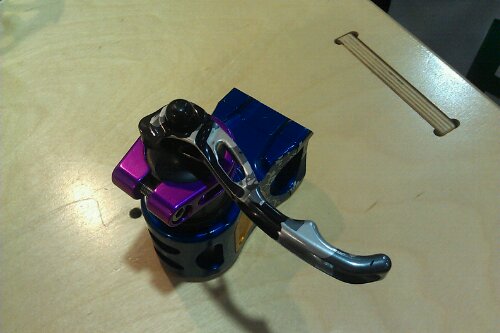
Their lever blade design looks great. Would love to try these with the Avid levers on my 429.

image

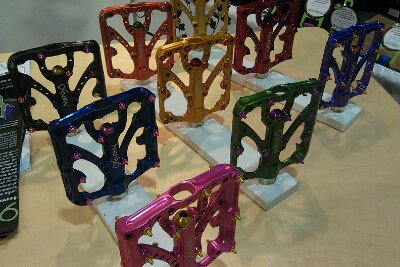
I’d already posted a shot of the upcoming Predator pedal. Despite being incredibly low profile, the pedals saved room for sealed cartridge bearings, titanium or cromoly spindle options, and replaceable pins with breakaway grooves to help preserve your threads.

Twenty6 is one of those small companies building products they want to put on their own bikes, and it shows.

Interbike Favorites: Fox D.O.S.S. & Engineering

 Bikes  Comments Off on Interbike Favorites: Fox D.O.S.S. & Engineering
Sep 272011
 

image

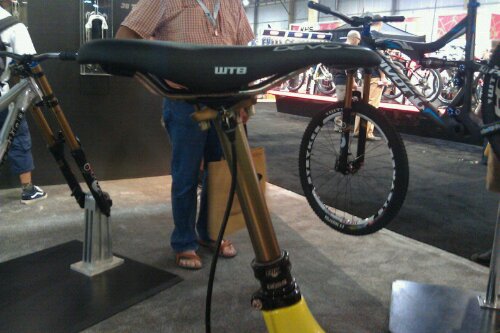
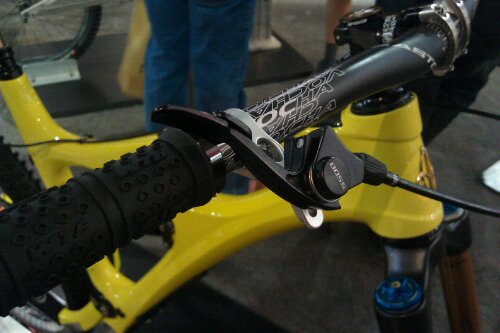
Yes, it’s taken them too long to produce one, and yes, the remote lever looks like it was stolen from a hydroelectric dam’s control panel, but Fox’s D.O.S.S. is one of the brightest signs I saw at Interbike.

image

Why? Because it signals actual growth and development. Sure, a lot of us remember the original design, but dropper posts are A New Thing, and if you’ve read most of my rants heretofore, you know I’m rooting for innovation. Any time an entirely new category of products hits the market, and established brands begin to support the category by making products, it’s a good thing.

Maybe I’m hyper-sensitive to this right now because my country keeps being declared a has-been when it comes to innovation, and I’m old and cranky enough to remember when we did actually make some pretty cool stuff for these newfangled bicycle with gears and big, fat tires. And yes, I know the Oregon Manifest is going on as I type, and that some of the most beautiful bikes in the world will be on display in Sacramento this March. Yes, beautiful things are still crafted in the U.S. But that’s not the same as engineering. Confused about the difference? Let me help.

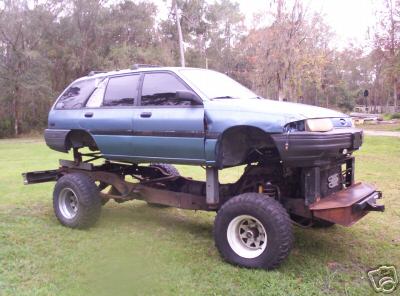
1. Built in the U.S.A.
image

2. Engineered in the U.S.A.
image

Sure, the Escort probably gets better gas mileage, even with the leaking tank, but I can promise you a lot of thought went into that second one, which seems to be a variation of the new Oshkosh M-ATV military vehicle. They were doing brake tests on it on my mountain when I was driving one of the kids home from school the other day. Apparently, it has no defense against idiots passing it and snapping photos.

So, while there are a lot of artisans around, when it comes to U.S. engineering in the bike industry, there doesn’t seem to be much going on, with the exception of precious few guys like Lance and Chris Canfield . While it’d be nice to see more manufacturing going on here in the States, Fox having to play catch-up means at least some product development is still breathing, and that involves smart people in the United States of America who know complicated stuff like math. Regardless of where their stuff is actually made, I know that Fox has U.S. engineers–real, genuine human being ones–that actually live in the United States. I know this because I’ve seen them.

Unlike the case in so many industries, there is still a spark of bicycle engineering left in my country, and every time a brand enters a new category, it means people who ride bikes thinking about how to make them better. When I see that putting food on the table for somebody who knows how to use stuff like PTC, Solidworks, or AutoCAD, it makes me happy.

Finally Time for Some Little Guy Innovation?

 Bikes  Comments Off on Finally Time for Some Little Guy Innovation?
Sep 262011
 

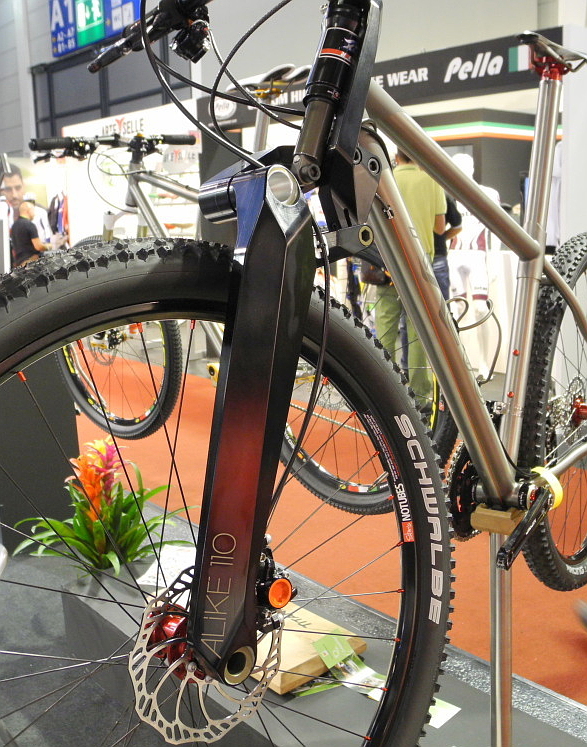
Question: You run into the Alike 110 out there? Know anything about it? (Seen at MTBR.com.)

PS Like your FS Design… let me know when the prototype comes about.

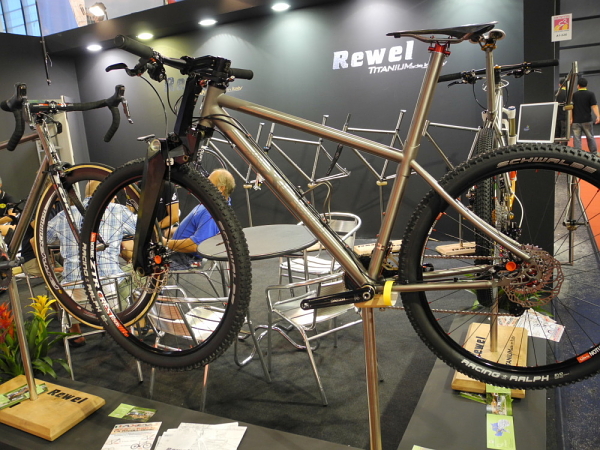
Answer: It’s a wild-looking fork, but, unfortunately, that Alike 110 appears to be only a plastic prototype at this point.

Alike 100 Prototype Carbon Linkage Fork

Though rare, parallelogram forks have existed since the original Girvin, but they’ve never been able to get much traction in the market.

Partly, their failures can be attributed to problems with those early designs (wear, shock position, and some minor freakiness related to axle path), and the momentum that telescoping forks developed in those early years. But a lot has changed. The companies that make telescoping forks have all the OEM markets locked up, but that doesn’t explain why garage DIY types haven’t stepped up to bring the strangeness. You’d think a guy with a lathe somewhere in Northern California would have been showing off something similar to this by now. We’re certainly due for some good, old fashioned innovation.

Another Alike 100 Prototype Fork Shot

So this Italian single-sided is still mostly imaginary, but here are a few reasons I think we could actually see something like this soon:

Big Wheels are a Game Changer – The Alike 110 pictured is on a 650b bike, but it’s 29ers that continue to drive a lot of innovation today. As 29ers become increasingly mainstream, they cause more and more people to rethink traditional designs. I’m convinced a big part of previously DH design elements making their way onto XC bikes–things like 15QR and 142mm rear axle spacing–were heavily spurred on by 29ers, which gave most companies the guaranteed additional sales necessary to invest in new things. When it comes to designs, big wheels continue to be prime instigators of change.

Cannondale’s Lefty – It’s been around for a long time now, proving itself a viable alternative and–most importantly–creating a fork (no pun intended) in suspension system development. Small as it is, the Lefty’s ecosystem of hubs makes other single-sided forks possible. Having two legs was one of the things that never made sense about previous linkage forks, but the long term existence of a viable single-sided fork helps make a linkage fork possible.

We Need It – Even if someone only makes three of these things, and the last owner ends up having to modify it to use bigger bearings or something, this kind of wacky stuff used to be part and parcel of mountain bike culture. While you’d be a fool to embrace every piece of ill-conceived garbage we once had to wade through downstairs at Interbike, we probably shouldn’t forget how guys like Keith Bontrager once resorted to the occasional dumpster dive in the name of innovation. Blame mountain bikes “selling out” or blame the reality of the current economy, but thinking outside the box by small companies just isn’t happening the way it once did. Plastic or not, it makes me smile to see out there designs like this fork.

(And thanks for the kind words about the suspension design! Development started way back in the Asylum days, and I’ll keep anyone interested posted here.)

Caught a Bug

 Bikes  Comments Off on Caught a Bug
Sep 252011
 

image

Sitting in a Medexpress doctor’s office after the obligatory two-hour wait. From the single, tiny tree photo quadruple-matted in the middle of a way too-large frame, to the mint green walls, I believe this room was designed to cause disorientation and induce nausea. In my neck of the woods, I suspect they pump a lot of stomachs. Might as well let the room itself give you a head start.

Speaking of my neck of the woods, I’m here because I finally got nailed by a deer tick (Ixodes fukinverminbuga dammitall). Say, does this look infected? Bullseye


Caught well within 24-hours, but worse than my usual “immediately,” my little friend attached herself behind my knee–not the easiest place to reach for safe and tidy extraction. Did it, though. Even the doctor commented on the quality of the extraction. I’m a pro. If you’re wondering, never go the hillbilly “burn it with a match” or anything route. The bacteria what causes (we say “what causes” here in The Sticks) Lyme disease sits dormant in a tick’s gut. It takes warm blood to fire up the bacteria, which then makes its way to the tick’s saliva, which is where you enter the picture. The only safe way to remove a tick is to grasp it as near it’s mouth as possible with tweezers or a tick removal tool (like a little metal bar that narrows to catch under the tick) and very gently pull it away from you. Never just crush it or grab it further back on its body, because our objective here is to keep the contents of its stomach inside its stomach.

Yeah, nasty. Better still, consider investing in one of these:

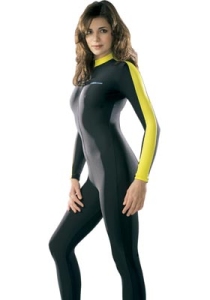
Anti-tick Wear

The scuba suit, I mean, though I suppose you could have an attractive scuba suit model run through the woods ahead of you, collecting disease-carrying ticks, if you had enough money to make magic like that happen.

At any rate, here’s my girl.

image

This tiny creature cost me a lot of worry and two hours in the local MedExpress, which–in case you don’t know–is eerily like this.

Off to take some anti-biotics.

Interbike Favorites: The New Revolution?

 Bikes  Comments Off on Interbike Favorites: The New Revolution?
Sep 222011
 

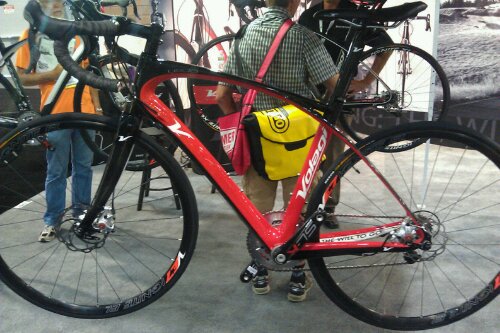
I would never have thought I’d be fond of a road bike with disc brakes, but I am. Very much so, in fact. In my defense, though, the Volagi Liscio is a pretty unique bike, even without the hydraulic disc brakes.

image

“Liscio” is Italian for “straightforward, simple, smooth and sleek,” and that pretty much sums it up. The bike somehow manages to look like both a basic tool for endurance riding adventures and a stunning piece of high-velocity sculpture.

A lot of the credit for the aesthetics goes to those seatstays, which, as you probably guessed, act as giant leaf springs to damp vibrations from the road. The entire frame appears to be built outward from that gentle arc of the stays–a kind of internal suspension system. Form following function, I tend to love designs with obvious purpose, and Volagi achieves that visual intent here. The lines mean something.

image

There is, no doubt, a significant number of serious cyclists for whom the Liscio is an affront to all that’s sacred. Eventually, a percentage of these will glance from their Ducatis to their road bikes and warm to the concept, but many never will. At least, not until the weight starts to drop. It’s wise that Volagi is also making their own carbon wheelsets, because all parts need to work together to keep weight down on a disc brake equipped bike. What you add in disc calipers and rotors, you can peel back away elsewhere, but it takes a holistic, system sort of approach to get there.

Given how much time I’ve spent on a Salsa La Cruz, I already understand the advantages of disc brakes and drop bars. While it’s tricky to imagine life without the road bikes I have now (we’ve been through a lot together), I could see making a bike with discs my primary road bike. And I could see the Liscio being this bike. This was one of the best things at the show.

Chainring Countdown

 Bikes  Comments Off on Chainring Countdown
Sep 212011
 

Question: So the dirt world gave up on the five-bolt crank a while ago for no apparent reason. Now FSA is running ads for a three-bolt crank. Where will it end: a no-bolt crank held on by good intentions? What’s to be gained by the different bolt patterns anyway, aside from orphaning whole warehouses of perfectly good chainrings?

Approved Answer: The key here is something called “system engineering,” which refers to the habit component manufacturers now have of making all their stuff only work with their other stuff. Back when mountain bikes as a concept were a dark and terrifying forest of confusion, brands tended to make wild guesses about what might work best, usually by putting photographs of motocross and road bikes on the wall next to one another and opening and closing each eye real fast until the two sort of blurred. But at least manufacturers all stuck together on those decisions. Hence you had brake levers modeled closely after the lever on a Yamaha YZ 125, and mighty “standard drive” 5-bolt chainrings with at least 46 teeth. These were different times.

I’m pretty sure Shimano fired the first shots in the proprietary chainring revolution, but, like any slow descent into a corporate state, it was the willingness of the people to go along with the change that really allowed it. Your friend who had to have the Coda crankset with the built-in alloy chainrings? He did it. We all let chainring standards disappear because it was the ’90s, and we were all about buying a whole new crankset when our rings wore out; and because we really liked lightweight stuff.

Manufacturers started shaving away everything that wasn’t necessary, and it became apparent that designing your components to work with a countless array of alternate parts available from other brands made less and less economic sense. That’s why today we have only the stammering zombie remains of the last known chainring standard, the 64mm/104mm 4-bolt ring.

The Real Answer: For the past ten years, decisions about standards and innovations in the bike industry have been tightly controlled by a single overseer. The symbols and letter-like-slashes “Mittens” scratches daily into the leg of a dining room table in a home somewhere in Bayonne, New Jersey are taken as infallible engineering law, transcribed, and sent directly to Taiwan and China for the fabrication of new bike parts. This is the real source of most designs you see currently on the market.

Knog crap? All me.

The New Normal

 Bikes  Comments Off on The New Normal
Sep 192011
 

Interbike 2011 is over, and I’m still trying to process the bigger picture. Many things were witnessed at the Sands Expo, but it always takes a while to knit together the pieces and come up with some best-in-shows, catch the zeitgeist, and figure out the meaning. I don’t know that I’ve sorted all of that out yet, but, after much consideration, I’ve come up with a few observations.

No Going Back Now on 29ers
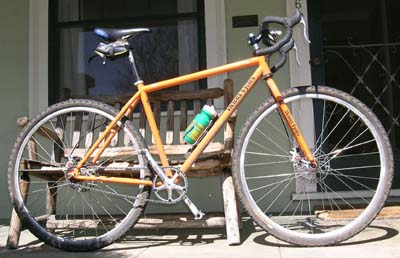
Vicious Cycles The Motivator

Vicious Cycles The Motivator Owned by Paul of Paul Components


It was clear at this year’s show that the tipping point has been reached. All companies now need both a carbon fiber 29er and a full-suspension 29er in their lineup, and preferably a bike that offers both carbon fiber and a bitchin’ suspension design. Those left offering only bikes with 26″ wheels better hope Europe never gets the memo that 99% of their riding would make more sense with bigger wheels or that synthetic bull bile doesn’t kill off the “extreme” demographic.

I’m not bemoaning the success of my preferred wheel size, and I don’t mean to be one of those bitter, old guys who refuses to wear a CBGB shirt because he’s actually been to CBGB’s. I love big wheels enough to share, and I’m glad they’re everywhere. If guys like Carl Schlemowitz and Wes Williams had figured out how to patent using 700c road bike rims on a mountain bike, maybe the “magic” would still be there, but magic’s a poor substitute for tire, rim, and fork selection. We should all be happy there are now two viable wheel options are represented on the market.

Still, it’s tough to see so little credit going where it’s due–particularly since we’re now in the “collective amnesia” phase of big wheel adoption, wherein everybody has one, and is obligated to act as if they always have, while the guys who took all the chances can’t afford booth space at the show.


Go Big (Numbers) or Go Home
image

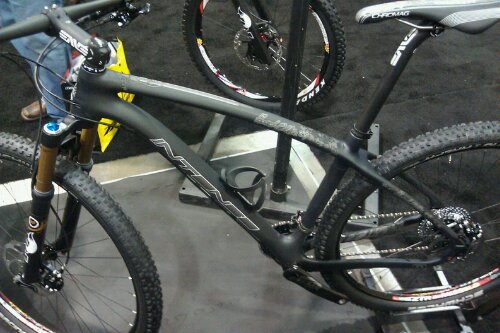
Intense Keeping Up with the Joneses for Carbon Fiber


In a time when America is wondering where its manufacturing jobs have gone and how to get some back, the bike industry presents a stark reality: U.S. manufacturing can’t compete with the products coming out of China and Taiwan. The Intense Cycles booth–drastically smaller than in years past–was displaying two carbon fiber bikes. The Carbine full-suspension trail bike and Hard Eddie hardtail 29er certainly give small frame builder Intense a much needed update, but with the introduction of these outsourced frames, the brand that built their entire reputation on “Made in the U.S.A.” seems to be finally bowing to the pressure of overseas production.

And can you blame them? Quick quiz: which frame sold more units?

  • Intense Spider 29
  • Santa Cruz Tallboy

Not really a contest, that. The Tallboy might’s well have added a jet engine to Santa Cruz sales. The Spider 29 can’t compare.

Thing is: you can only convince people to buy a U.S. made product at a premium if there’s a tangible advantage the consumer can use to justify the purchase. When a much lighter, much stiffer, and just better all-around frame is available for a similar price, the U.S. consumer is going to vote for overseas production. To meet that demand, a manufacturer like Intense needs to go overseas. Apparently, at the end of the day, there just aren’t any facilities in the U.S. capable of producing a carbon fiber bicycle frame for anywhere near the cost of Taiwan or China, the two most likely places of origin for the apparently German-designed, U.S.-assembled Intense carbon fiber bikes.

And that sucks.

Sure, you’ll still be able to feel pretty elite and bereft of spending cash by buying a bike only America can produce, and I don’t think Richard Sachs is going to be searching alibaba.com for a production partner any time soon, but anyone who thinks Steber at Intense didn’t have a gun pointed at his head on this one just isn’t paying attention to the global economy. Intense was forced to produce two new bike frames–probably what will be their best selling frames ever–outside of the U.S.

My question isn’t, “How can we make affordable carbon fiber frames in the U.S.?” Right now, we can’t. My question is, “Where’s our bicycle fabrication equivalent of SSC?” Would it be possible for the U.S. to produce a bike so over the top, from a design and engineering perspective, that every other mountain bike would dream of being that bike? Might be pure stupidity, but I’m still holding out hope for the answer to that one.